


Storage is one of the most confusing specs to pick when buying an Android phone, since options range from 64GB to 1TB with little guidance on what actually fits your needs. Most people end up either overpaying for space they never touch or running out within a year.
The real answer to the storage question depends on how you actually use your phone. Most Android users land comfortably between 128GB and 256GB, but the exact number still depends on habits like photo taking, gaming, and video recording.
Quick Answer: Recommended Storage by Use Case
| If you mostly… | Get this much storage |
| Text, browse, and use social apps lightly | 64GB to 128GB |
| Take regular photos and stream media | 128GB to 256GB |
| Game often or shoot 4K video | 256GB to 512GB |
| Edit video, shoot RAW, or avoid cloud storage | 512GB to 1TB |
How Much Storage Do You Actually Need on Your Android Phone?
Most Android buyers land in one of four usage patterns, and each one points to a different storage size. Find the description below that fits how you actually use your phone, then check the recommended tier next to it.
| User Type | Recommended Storage | Typical Activities |
| Light User | 64GB to 128GB | Messaging, browsing, social media, occasional photos |
| Moderate User | 128GB to 256GB | Regular photo and video capture, music and video streaming, several everyday apps |
| Heavy User | 256GB to 512GB | Mobile gaming, frequent 4K recording, larger media libraries |
| Power User / Creator | 512GB to 1TB | RAW photography, 4K or 8K video editing, offline media hoarding, minimal cloud reliance |
Light User (64GB to 128GB)
If your phone is mostly for texting, browsing, and light social media use with occasional photos, 128GB comfortably covers you. Going lower than that leaves very little room once system files and app updates settle in.
Moderate User (128GB to 256GB)
This covers most people. Regular photo taking, a handful of games, streaming apps, and daily use across several apps fits well within 128GB to 256GB, especially if you’re comfortable using cloud backup for older photos.
Heavy User (256GB to 512GB)
If gaming or frequent 4K video recording is part of your routine, files pile up fast. 256GB is workable, but 512GB gives breathing room without needing to manage storage constantly.
Power User or Content Creator (512GB to 1TB)
Anyone shooting RAW photos, editing 4K or 8K footage directly on their phone, or keeping large offline media libraries should look at 512GB or higher. This group benefits the most from skipping cloud dependency altogether.
What Actually Eats Up Storage on an Android Phone
Before picking a tier, it helps to know where your gigabytes actually go.
The Operating System and Pre-Installed Apps
Android itself, along with manufacturer bloatware and system apps you can’t delete, typically takes up 10 to 15% of your total storage right out of the box. A “128GB” phone often gives you closer to 110GB of usable space before you’ve added anything.
Photos and Videos
This is usually the biggest space consumer. A single high-resolution photo runs roughly 3 to 8MB, but 4K video can eat up to 400MB per minute. Someone who records a few short 4K clips a week can burn through several gigabytes a month without noticing.
Apps and Games
Basic apps like messaging or banking tools are small, often under 100MB. Modern games are a different story, with many AAA mobile titles now taking up 2 to 4GB each, sometimes more once you factor in updates and cached game data.
Cached Data, Downloads, and Offline Media
Streaming apps cache thumbnails and previews, browsers store site data, and downloaded PDFs, podcasts, or offline playlists quietly pile up in the background. None of these are huge individually, but they add up over months of regular use.
Why “128GB” Never Feels Like 128GB
Between the OS overhead, pre-installed apps, and system reserves, the number printed on the box is never the number you get to use. This is normal across every manufacturer, not a defect, but it’s worth planning around rather than being surprised by later.
RAM vs. Storage: A Common Mix-Up
These two specs get confused constantly, especially by first-time Android buyers comparing spec sheets.
- Storage is where your files live long-term: apps, photos, videos, documents. This is what fills up over time.
- RAM is temporary memory your phone uses to run apps in the moment. It affects multitasking speed, not how many photos you can save.
A phone with more RAM won’t give you more room for files. If you’re running out of space, storage is the spec to increase, not RAM.
How to Check How Much Storage You’re Already Using
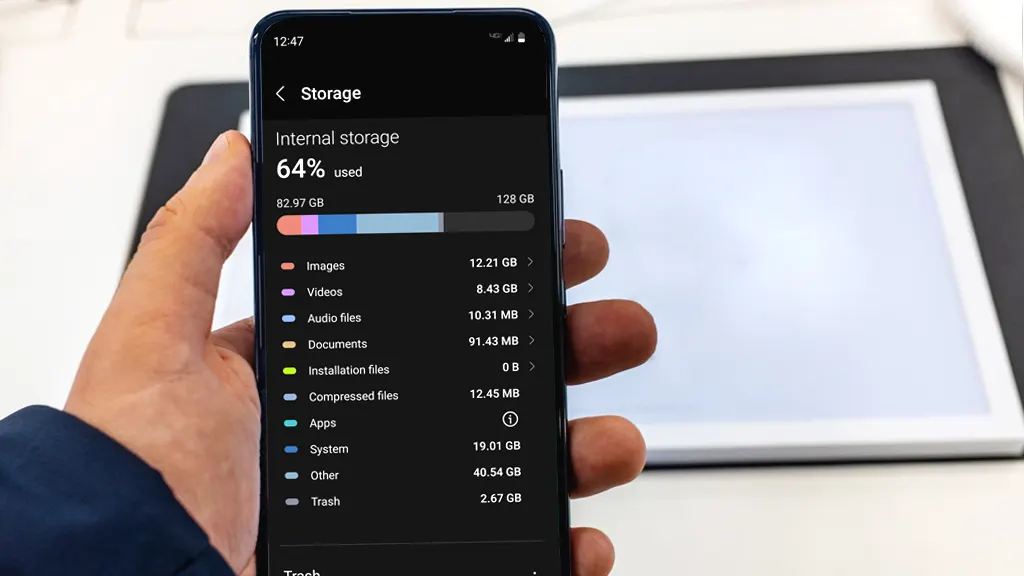
Checking your current storage usage only takes a minute and shows exactly where your space is going. Here’s a general method of checking your Android storage:
- Open Settings on your Android phone.
- Tap Storage (sometimes under Device Care or Device Maintenance, depending on the brand).
- Review the breakdown by category: apps, photos, videos, system, and other.
- Note which category takes up the most space and how close you are to your current limit.
This single check tells you more about your real needs than any generic recommendation.
Expandable Storage: Does microSD Still Matter on Android?
One advantage Android still holds over iPhones is microSD support, though it’s becoming less common on flagship models. Budget and mid-range Android phones are more likely to include a microSD slot than premium ones.
A few things worth knowing before relying on it:
- microSD cards are typically slower than a phone’s built-in UFS storage, so apps and games often can’t be moved there.
- They work well for storing photos, videos, music, and downloaded files.
- Card capacities now go well beyond what most people need, with some options exceeding 1TB.
- Not all Android phones let you use a microSD card as extended internal storage versus simple removable storage, so check your specific model.
Cloud Storage as a Storage Strategy
Cloud storage isn’t just a backup plan. It’s an active way to reduce how much local storage you need. Google Photos can automatically back up images and videos, then free up local space once they’re safely stored online. Google Drive works similarly for documents and other files.
If you rely on cloud backup consistently, you can often get away with a smaller storage tier than someone who keeps everything on-device. The tradeoff is needing a stable internet connection to access older files when you need them.
Future-Proofing: How Fast Storage Needs Actually Grow
Storage needs don’t stay flat. Camera resolutions keep increasing, app sizes keep growing with updates, and OS updates themselves take up more room each year. Someone comfortably using 128GB today may find themselves closer to the edge within two to three years of normal use.
If you plan to keep your phone for several years rather than upgrading annually, it’s worth buying one tier above your current calculated need. This small upfront cost usually beats dealing with constant storage management down the line.
Final Takeaway on Android Storage You Need
There’s no single correct storage size for every Android user. The right amount depends on how you actually use your phone, not what a spec sheet suggests.
Check your current usage, match it against your habits, and factor in a bit of room for growth. That approach beats guessing every time, and it keeps you from paying for space you’ll never touch.
Important Questions about Android Phone Storage
For most people who take regular photos, stream music, and use a handful of apps, 128GB is enough. Heavy gamers or frequent 4K video recorders will likely outgrow it faster.
More storage itself doesn’t directly speed up a phone, but running low on storage can slow things down. Keeping some free space available helps your phone run smoothly.
Some Android phones support microSD cards for expandable storage, though this feature is less common on newer flagship models. Once your storage tier is set at purchase for internal memory, it usually can’t be increased.
Without cloud backup, you’ll need to rely entirely on local storage for photos, videos, and files, so a higher tier like 256GB or more is safer. Regularly clearing unused apps and files also helps stretch that space further.
Apps may stop updating, photos and videos may fail to save, and overall performance can slow down. You’ll usually get a system notification well before storage is full, giving you time to clear space.
