


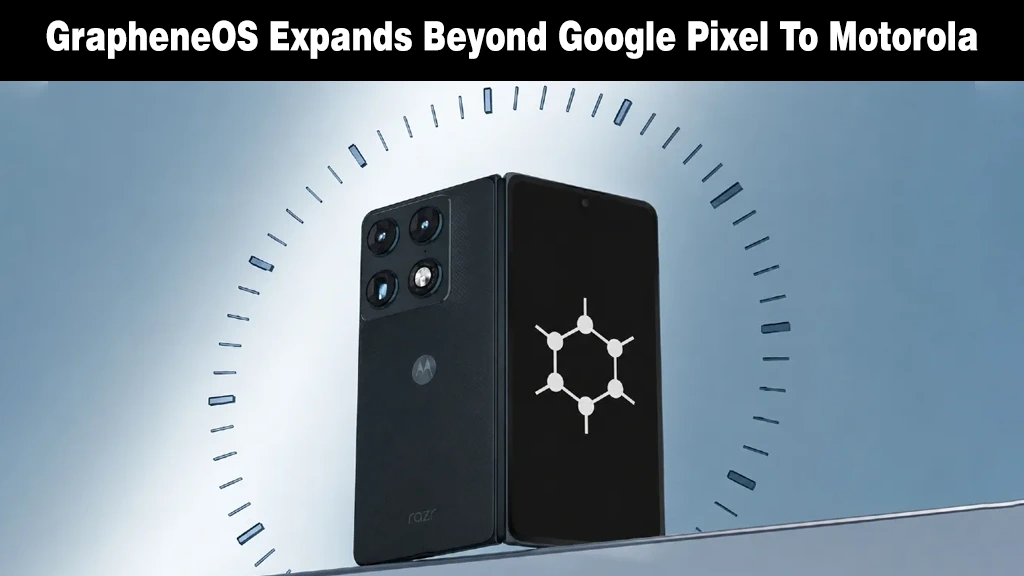
If you’ve ever wanted GrapheneOS but couldn’t stand the idea of buying a Google Pixel to run a Google-free operating system, that contradiction is finally going away. GrapheneOS has confirmed that the Motorola Signature 27 will be its first officially supported non-Pixel device, according to Android Authority.
Why This Actually Matters to Users
For years, the pitch for privacy-conscious Android users came with a glaring catch: run GrapheneOS, sure, but only on hardware made by the very company you’re trying to get away from.
That tension has been a frustration in the privacy community, and it’s part of why How-To Geek framed GrapheneOS as proof you don’t need Google or Apple to run a secure phone, even though, until now, actually installing it still meant buying from Google.
That changes with Motorola in the picture.
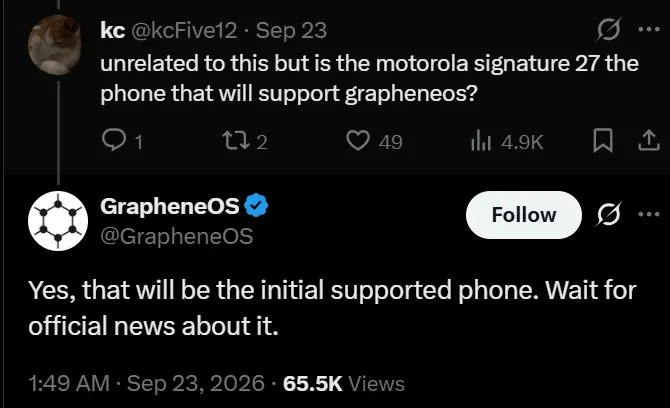
As Android Authority notes, the confirmation came after an X user directly asked whether the Signature 27 would get support. GrapheneOS replied simply: “Yes, that will be the initial supported phone. Wait for official news about it.”
What’s Actually Under the Hood
The Signature 27 was seemingly built to clear GrapheneOS’s notoriously strict bar.
It ships with Qualcomm’s Snapdragon 8 Elite Extreme Gen 6, the same silicon slated for the successor of OnePlus 16.
It reportedly promises seven OS upgrades and up to seven years of security updates, matching the hardware memory, secure-element integration, and long-term support commitments GrapheneOS has said are non-negotiable for any new Android device it supports.
What Users Should Know Right Now
GrapheneOS hasn’t announced a launch date for Signature 27 support, nor confirmed whether Motorola will offer the OS preinstalled out of the box.
So this isn’t a “buy it today” moment yet. But for anyone who has been holding out hope for a real alternative to Pixel, the answer to “which Android phone?” no longer needs a question mark.
The Signature 27 is first in line, with Motorola foldables reportedly next on GrapheneOS’s roadmap.
Source: GrapheneOS just confirmed its first supported non-Pixel phone

1 Comment
Pingback: China Debut Set For New OnePlus 16 Flagship